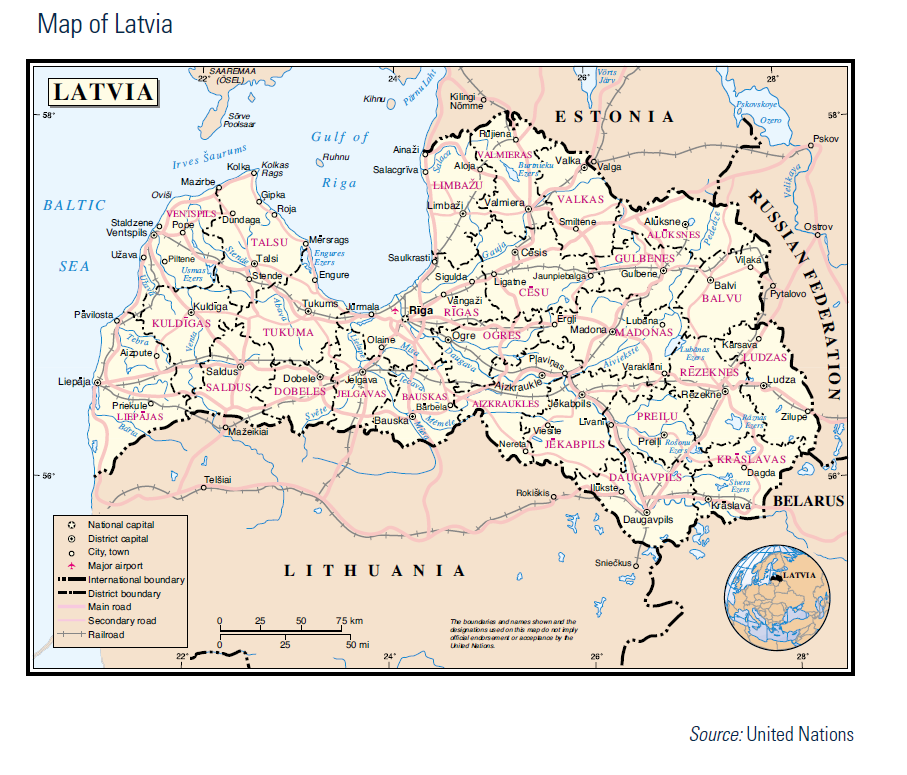
The Republic of Latvia is one of the Baltic countries (Estonia, Latvia and Lithuania). Situated in north-eastern Europe on the east coast of the Baltic Sea, Latvia forms part of the eastern border of the EU. It borders Estonia to the north, the Russian Federation to the east, Belarus to the south-east and Lithuania to the south. To the west lies the Baltic Sea and the Gulf of Rīga. Rīga – the capital of Latvia – is centrally located and is situated on the Daugava River estuary on the Gulf of Rīga (Fig1.1).
Fig1.1
Latvia’s territory is 64 559 km2 (about twice the size of Belgium), with a flat landscape and extensive forests covering 47% of the land area and forming Latvia’s most important natural resource. About 21% of the territory (12 790 km2) consists of nationally protected areas. The highest point in Latvia is Gaizinkalns, which is 311.6 m above sea level, but the average elevation of Latvia is only 87 m.
The Baltic Sea and the Gulf of Rīga strongly influence the regional climate, which is temperate, with average temperatures of 20°C in summer and −5°C in winter.
In 2018, Latvia had a population of 1.93 million people (Table1.1). Since 1990, the population has declined by approximately 700 000 (or 26%) and since 2000 by approximately 400 000 (17%). The two immediate causes of the population decline are the negative net international migration and negative population growth. In 2017, the number of deaths exceeded the number of births by 7900, the largest difference recorded over the preceding four years (6600 in 2016). Although the crude birth rate has increased consistently since 1997 and the death rate has fallen steadily since 1995, the combined effect has been insufficient for positive population growth.
Table1.1
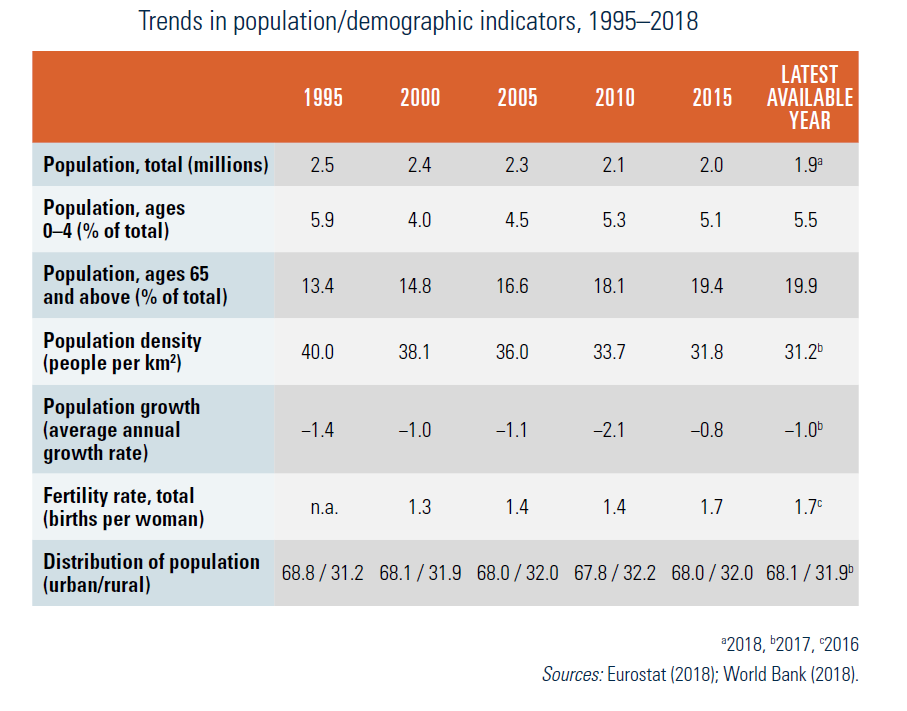
Similar to the rest of the EU the population of Latvia is ageing. Following a steady decline, since 2009 the percentage of children and young people (below 15 years) in the population slightly increased 15% (2016). However, the proportion of the population aged 65 years and over is steadily increasing, well exceeding the proportion of young people (19.5% in 2016). The shrinking of the working age population is particularly pronounced and is expected to continue; hence, the age dependency ratio and the burden of an ageing population are also expected to increase in the coming years. This decline in the population of working age is notably affected by migration: in 2015 twice the number of people of working age left Latvia (16 800) than immigrated to the country (7200).
The representation of Latvians in the total population was 62.2% in 2018. Notable differences in the population’s ethnic composition may be observed between regions and cities, with the proportion of Latvians ranging from 45.7% in the eastern region (Latgale region) to 86.7% in the northern and western regions. The three largest religious groups in Latvia are Catholic, Lutheran and Orthodox Christians, although it is assumed that a large proportion of the population is atheist.
The country is sparsely populated, especially in rural areas. The population density has continuously declined since 1990 (reaching 31.5 persons per square kilometre in 2016). In 2016, more than two thirds of the population (68%) lived in urban areas. Rīga accounts for almost a third of the total population and reports the highest population density, followed by cities under state jurisdiction and counties close to Rīga.
Latvia has a very high literacy rate, at 99.9% in 2015, and educational levels are rising. In 2015, 40% of 25–34-year-olds had acquired a tertiary education (close to the OECD average of 42%). Labour market forecasts have emphasized skills shortages in the fields of science, technology, engineering, mathematics and in health.